KOBO LEARN
How to Choose a Pickleball Paddle for Dinks Drops and Resets
A well-matched soft-game paddle supports confident dinks, controlled drops and composed resets. Explore its touch alongside blocks and counters to discover how it complements your complete game.
This guide explains what to look for and gives you a practical comparison session. It also explains where the KOBO Thunder AXE Infinity 18mm fits. KOBO makes the paddle, so this is a brand buying guide.
What a soft game paddle needs to do
A dink keeps the ball low near the kitchen. A drop helps you move forward from deeper in the court. A reset takes pace out of an attack and gives you time to recover. Those shots require different contact situations, so test all three rather than choosing from a single attractive specification.
Start with the shots you want to develop. For resets, focus on comfortable pace absorption and placement. For hand exchanges, explore preparation and recovery. For blocks, notice how the response supports your usual contact.
Predictable response on touch shots
During a demo, use a compact stroke and comfortable grip pressure. Look for repeatable depth and a response that lets you place the ball with confidence.
Core thickness works together with face construction, internal structure and player contact to create touch. Compare the complete build and the response you enjoy. Our 14mm, 16mm and 18mm core-thickness guide explains how to compare thickness without overlooking the rest of the build.
Comfortable preparation and recovery
Static weight tells you how much a paddle weighs. Swingweight describes rotational inertia about a specified axis: how much resistance it presents when you swing it. Balance, grip fit and aerodynamic drag also affect the playing experience. Read what air channels can change in fast exchanges for a closer look at airflow and mass distribution.
A lower swingweight can make acceleration easier, but a number alone cannot tell you how quickly you will recover in a rally. Compare forehand-to-backhand changes, counters and the final few exchanges of a longer drill.
Explore response across the face
Use controlled blocks to explore contact in different areas of the face. Observe direction, depth and feel as you become familiar with the paddle. This helps connect the construction to the shots you play.
Twist weight describes resistance to rotation around the paddle's long axis. It is one aspect of stability; your on-court experience brings handling, contact and feel together.
Where the Thunder AXE fits
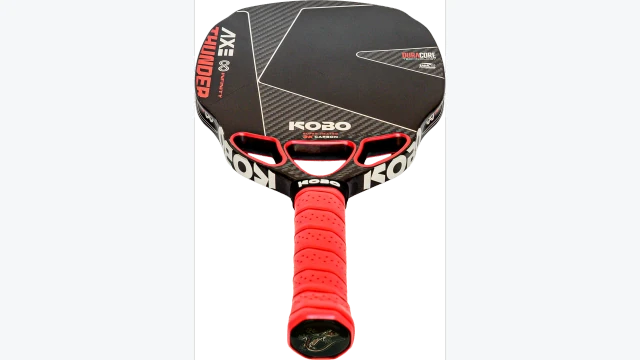
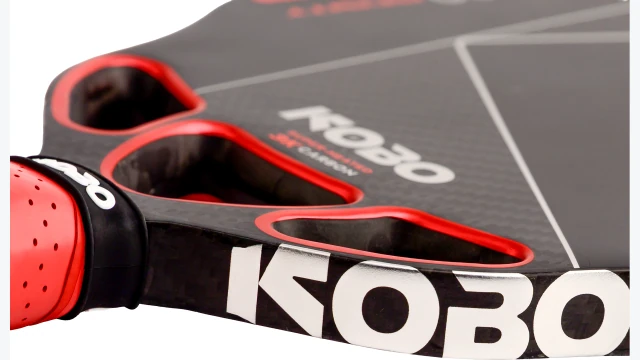
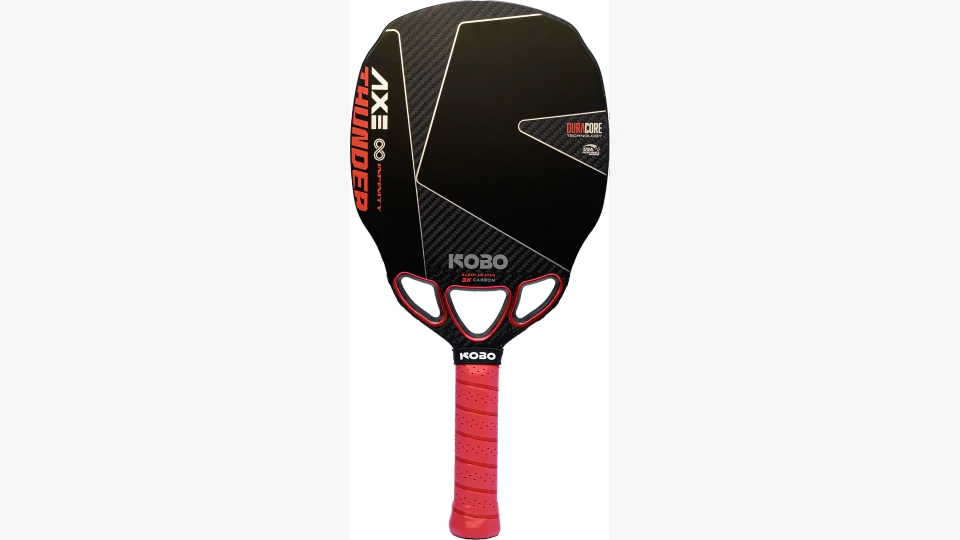
The Thunder AXE combines an 18mm DuroCore, Carbon Stripe Core Structure, EVA perimeter foam and thermoformed unibody construction. Its 3K carbon face has a SoftPlex surface coating. The three air channels are part of KOBO's design for efficient movement through the air. These features work together within KOBO’s engineering approach to touch, handling and player feedback.
KOBO recommends Thunder AXE for players around 3.5–5.0 who want to explore its distinctive response. Its intended appeal is controlled touch with the ability to generate pace through the player's stroke. It deserves a demo if drops, resets and placement are central to how you play.
KOBO describes the response as varying across the face, with more power from centered contact and a more controlled response away from the center. Explore that response during dinks, blocks and full strokes, allowing time to become familiar with the contact that feels best to you. Read KOBO's engineering explanation.
A practical comparison session
Bring your current paddle and one alternative. Use the same ball, partner and feeds, and alternate paddles during each drill. Allow time to become familiar with an unfamiliar shape before judging it. This is a personal demo checklist, not a laboratory test or a validated scoring system.
| Drill | What to observe |
|---|---|
| Cross-court dinks | Can you repeat a low trajectory without squeezing the grip harder? |
| Drops from the baseline | Can you find useful depth without repeatedly changing your swing? |
| Transition resets | Can you soften a firm feed and recover for the next ball? |
| Blocks away from the center | How much direction, depth and handle stability change |
| Forehand and backhand counters | Whether you arrive on time and recover comfortably |
Record the qualities you enjoyed: comfortable backhand preparation, repeatable reset depth or confident cross-court placement. A second session can help you become more familiar with a new paddle.
Keep the initial comparison in stock configuration. If you later customize, record what changed and repeat the same drills. Added mass can change several characteristics at once; it should solve a problem you have observed.
Find your preferred KOBO response
Choose around the way you enjoy building points. Thunder AXE brings KOBO’s 18mm construction and SoftPlex surface together for players exploring touch and placement. Our skill-level guide introduces other KOBO options for different playing priorities.
Thunder AXE Silver and Gold share the same construction and performance specifications. Choose your preferred finish with the same Thunder AXE engineering in either edition.
If touch and placement are your priorities, explore the Thunder AXE Infinity 18mm and compare it with your current paddle using the same drills.
Common questions
What should I look for in a soft-game paddle
Look for repeatable placement on dinks, drops and resets, comfortable preparation and a response that works with your normal stroke. Try the same drills with each paddle you are considering.
How can I become familiar with Thunder AXE
Begin with relaxed dinks and controlled blocks, then add drops, resets and full strokes. Explore the response at different contact locations and build up to your normal rally pace.
Can I personalize my Thunder AXE setup
Start with the stock paddle and become familiar with it first. Additional weight is an optional personal preference. If you choose to customize, make a small, deliberate change and repeat your usual drills.